The decks and emails for each meeting, drafted before you walk in.
When the month closes, the same numbers get rebuilt by hand for every room: a deck for the sales meeting, an update for the CEO and CFO, sometimes a version for each distributor. It gets done, often at the last minute.
The teams I talk with want to walk into each of those meetings with the story already told, the numbers behind it, and the time back to spend with their people.
The Brief keeps those meetings on one calendar, and it runs on the same goals and pace the Spotlight tracks, so the number you present is the one your reps were working to. You set each meeting up once: who it's for, the time it covers, what it focuses on and how much detail. When the month's depletions are in, the drafts start from them:
- a PowerPoint deck for the team's review, by region, rep, distributor and brand, with your talking points in the notes
- one page for the CEO and CFO, in dollars and margin
- a short question to each manager and rep on what the numbers can't show, with a reply-by time, so you hear it before you're in the room
- a note to each rep on what to be ready to talk about, and the calendar invite
You edit it and send it under your name. Nothing goes out on its own, and every change is kept for next month. The same setup works for a review with a distributor.
About 30 minutesto review a meeting's deck that can take three or four hours of spreadsheets and PowerPoint to build by hand, in my experience
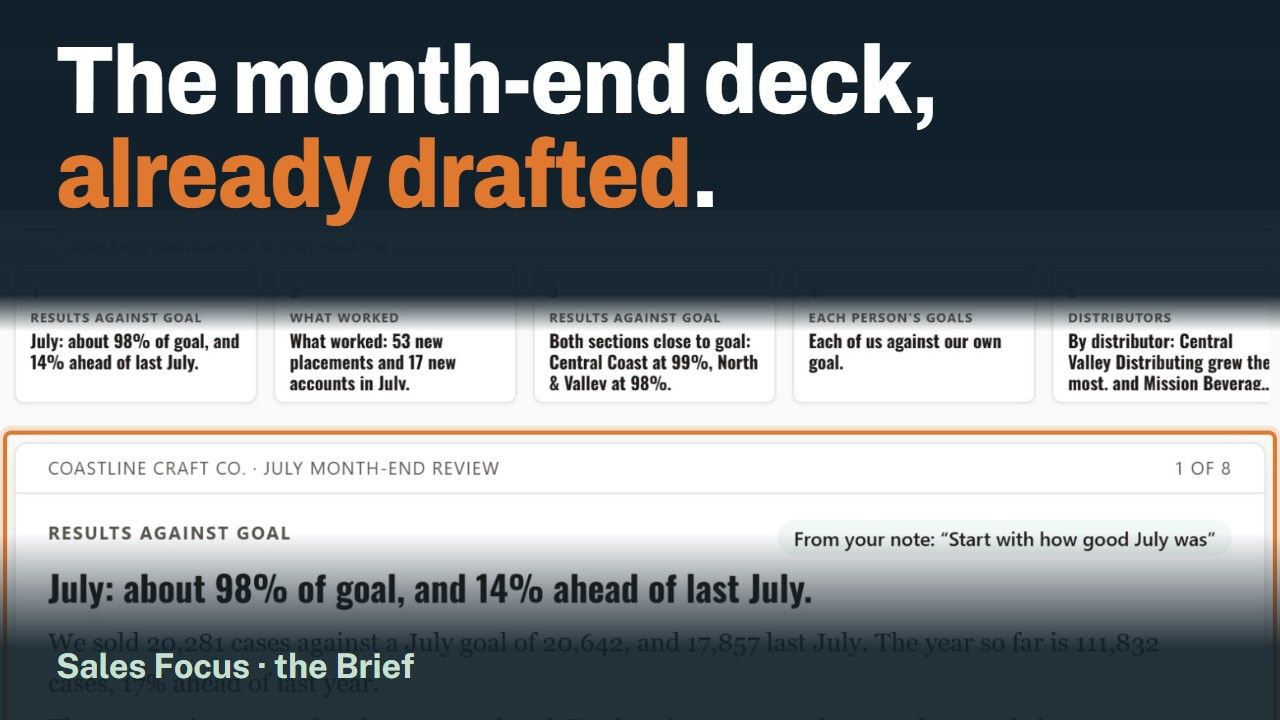
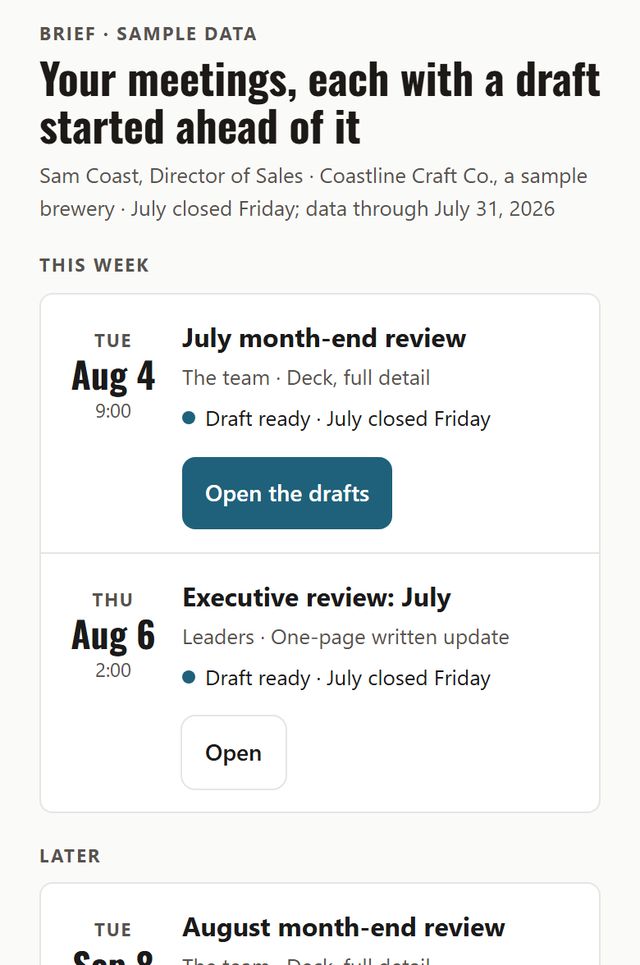
The meetings where you share how it's going, on one calendar. When the month's depletions are in, the drafts start from them. 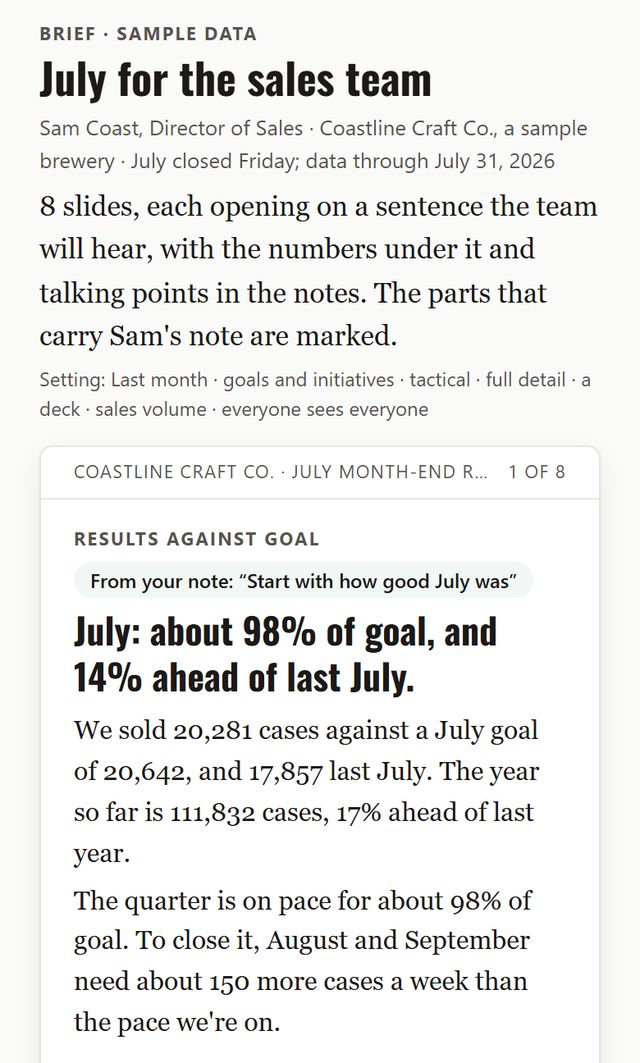
The team review opens on the story, with the numbers under it, and the parts that carry what you asked it to stress are marked. 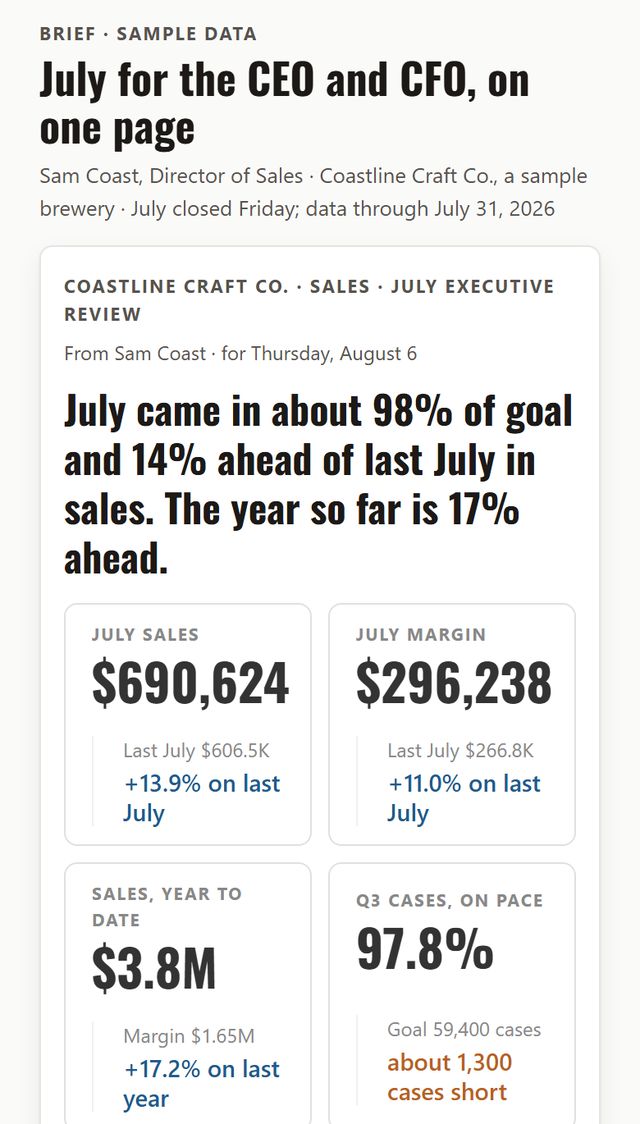
The same month on one page for the CEO and CFO, in dollars and margin. 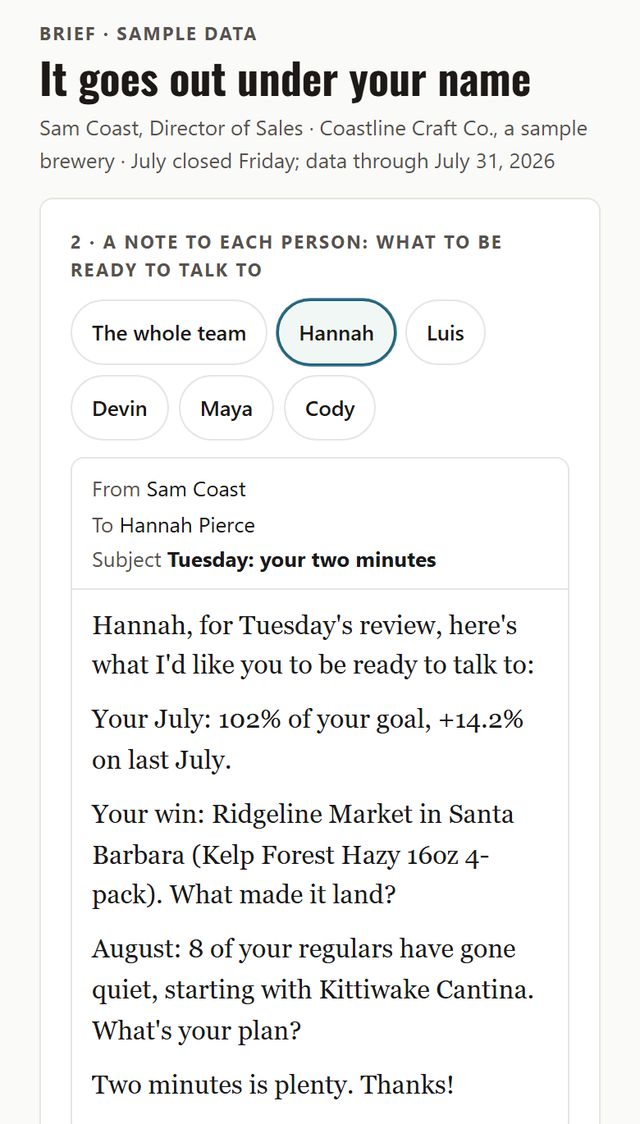
Each rep gets a note on what to be ready to talk about, drafted from their own month.
Let's talk about where you want to take sales from here.
If your reps are spending Mondays in depletion reports, or you're finding out about a slipping account a month late, you're feeling this already.
The first step is a 30-minute conversation. We'll talk through how your team decides where to focus today, and where better information could help.
Or email me at jeremy@centralcoast-analytics.com